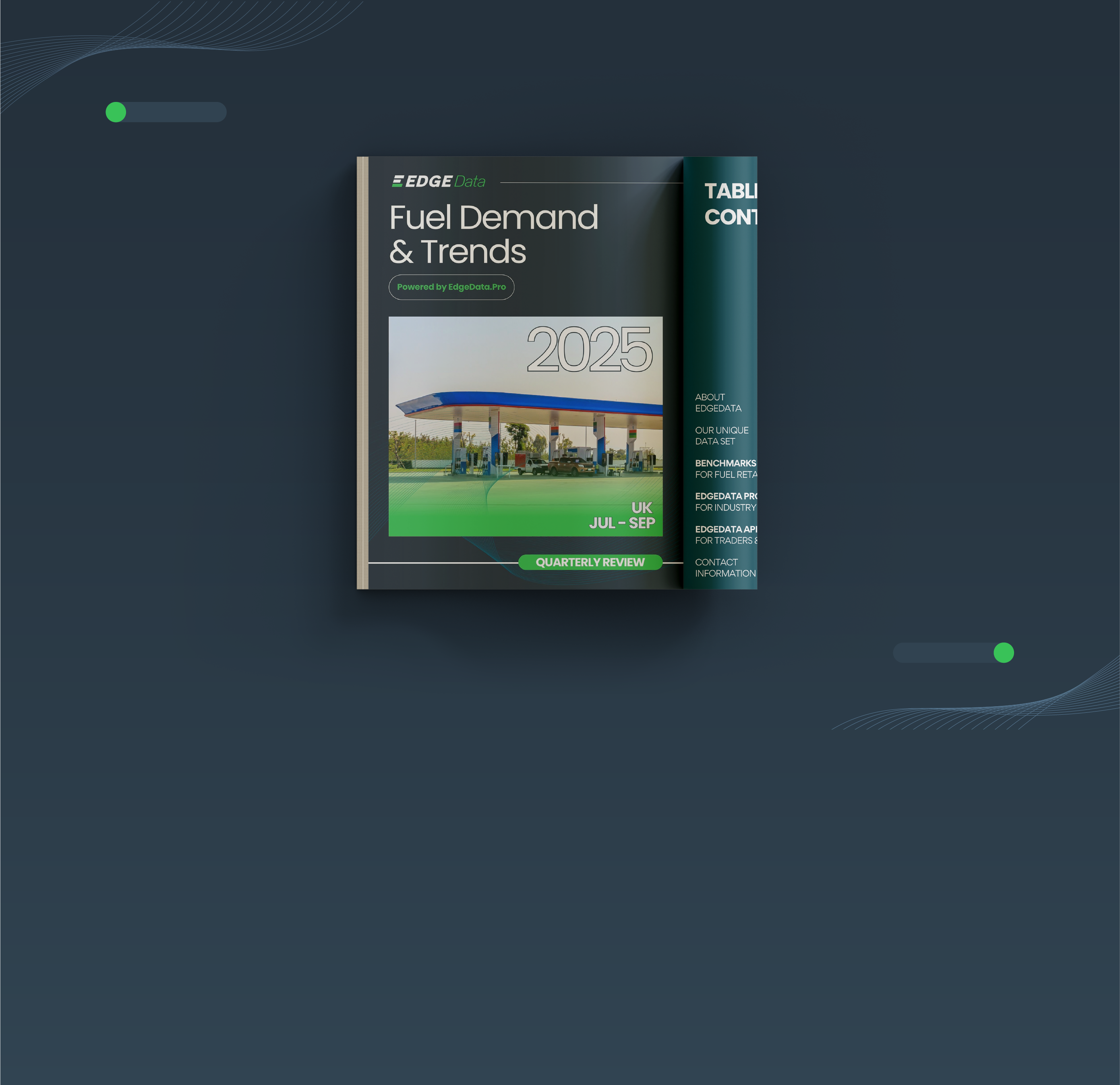
Each month, EdgeData’s Roadside Retail Report takes the pulse of the UK’s forecourt sector, tracking the numbers behind margin shifts, demand patterns, and the trends shaping operator performance across every region. The September edition doesn’t just close out another month; it wraps up one of the trickiest quarters the sector has faced in recent memory. What began with hints of recovery quickly turned into a story of renewed pressure and resilience.
Quarter 3 2025 was a reminder that, even in a mature market, change can come fast. Wholesale volatility, shifting consumer demand, and macroeconomic headwinds all combined to test the industry’s ability to adapt. Yet, beneath the challenges, there are also reasons for optimism. From the resilience of unleaded demand to the quiet strength of diversification strategies, there is a lot now taking root across the network.
Here’s a closer look at what shaped the quarter and what lies ahead.
The Quarter in Review: From Promise to Pressure
After a volatile summer, August offered a glimpse of stability. Margins began to recover, and retailers saw tentative signs of relief after months of turbulence. But the optimism didn’t last. By September, rising wholesale costs and weakening fuel demand had returned, squeezing profitability once again. Many operators held back from fully passing on these costs, aiming to protect throughput, but the trade-off was clear: lower margins and lower profits. By the end of Q3, both volumes and margins were down compared with Q2 and the same quarter last year. What started as a potential rebound ended as another reminder of just how fragile recovery can be in today’s market.
Shifting Demand: Diesel’s Decline, Petrol’s Persistence
Diesel’s downward trend has now become a defining feature of the UK fuel landscape. Volumes were down around 6% year-on-year in Q3, extending a pattern that’s persisted for 18 months. This decline is being driven not by one factor but by many: from fleet renewals and the rise of hybrids and BEVs, to shifting consumer attitudes about taxation, running costs, and sustainability.
Yet there’s a counterpoint: unleaded. Petrol demand has remained surprisingly resilient, offsetting diesel’s decline at many sites. Whether that strength reflects a short-term anomaly or a more enduring consumer preference remains to be seen, but for now it’s providing a vital cushion for retailers navigating the transition. If unleaded growth holds, retailers may have a little more time to diversify their shop offers, invest in EV charging, and rethink their business models. If not, the next phase of contraction could come sooner than anticipated.
Margins under Pressure Beyond the Pump
The challenges of Q3 weren’t confined to the fuel island. Rising employment costs driven by minimum wage uplifts and higher National Insurance contributions continued to eat into profitability. On the shop side, previously strong categories such as e-cigarettes and confectionery saw weakening demand as consumers grew more cautious with discretionary spending. High-margin impulse purchases are no longer the reliable profit pillars they once were. Layered on top of that is a tough macroeconomic picture: new tax measures, squeezed disposable income, and growing price sensitivity are reshaping consumer behaviour, with forecourts among the first to feel the impact.
Resilience, Adaptability, and Early Signs of Change
Still, Q3 wasn’t without bright spots. Retailers across the network are showing real adaptability, adjusting pricing strategies, experimenting with promotions, and finding ways to protect volumes without overexposing margins. More importantly, alternative revenue streams are gaining traction. Food-to-go, better coffee offers, parcel collection, and EV charging are no longer ‘nice-to-haves’; they’re forming the backbone of a more diversified, resilient forecourt model.
This adaptability underlines what’s always been true of the UK’s roadside retail sector: even under pressure, it evolves. The coming months will demand careful balance. Wholesale markets remain volatile, the domestic refining landscape continues to adjust after the collapse of Prax Group, and household spending is still under strain.
Discover More in EdgeData’s Full September Report
The EdgeData Forecourt Report – September 2025 goes deeper into the data, breaking down region-by-region performance, margin trends, and fuel mix shifts across the UK.